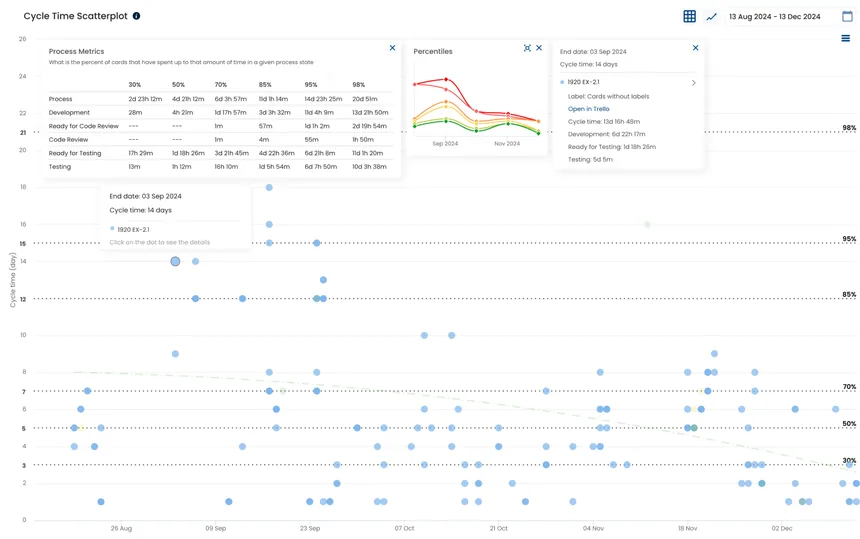
Cycle Time Scatterplot
Open the Cycle Time Scatterplot to see how long completed work items took and identify outliers that increased delivery times.
What it answers
Which current items need attention?
See which work in progress is taking longer than expected and needs attention.
Example

The count shows the number of tasks currently in progress in each list on your board.
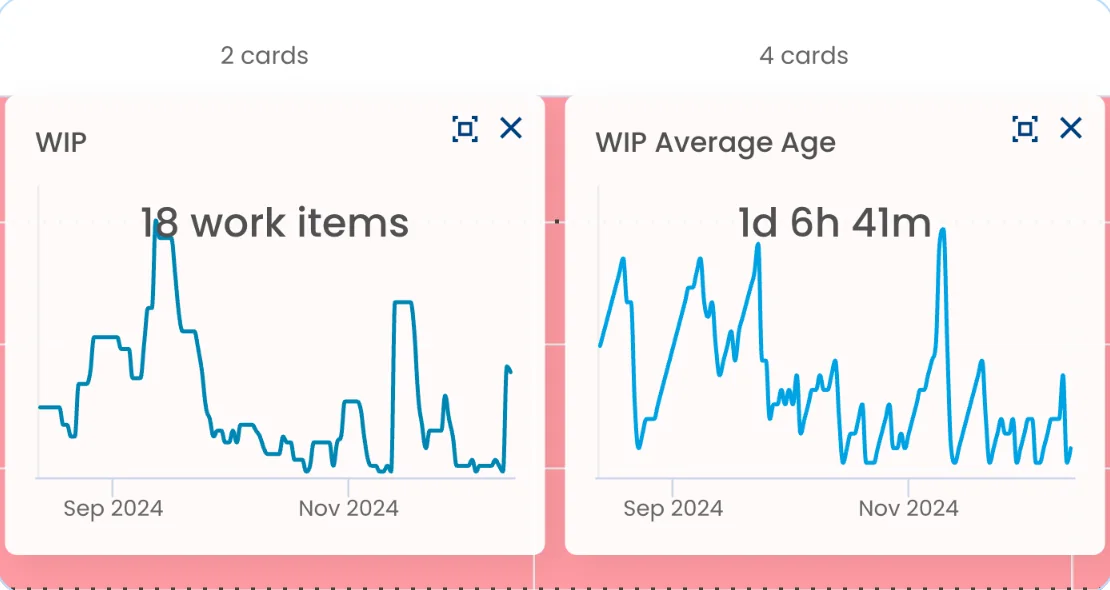
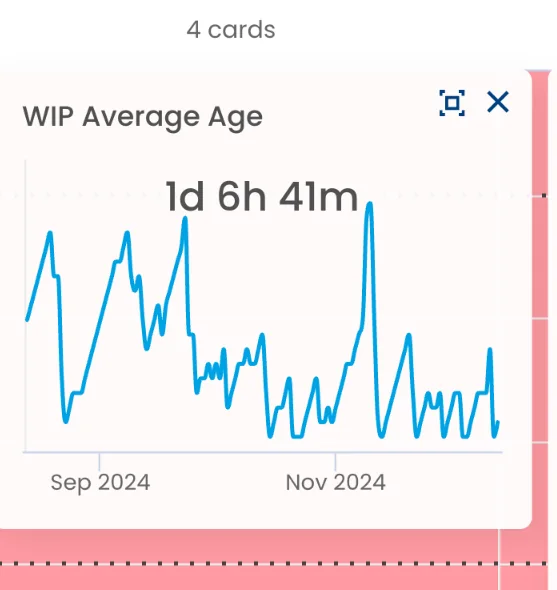
The WIP widget shows the number of tasks in progress and how WIP has changed over time. The ‘Average Age of WIP’ widget shows the average age of current work items and how that age has changed over time.
The zones show how tasks advanced through each process state in the past. The green zone represents the time that 50% of previous tasks spent in each state.
The percentile lines represent past performance and show the cycle times needed to complete previous work. Tasks that stay within the percentiles used for your service level agreements will be delivered on time.
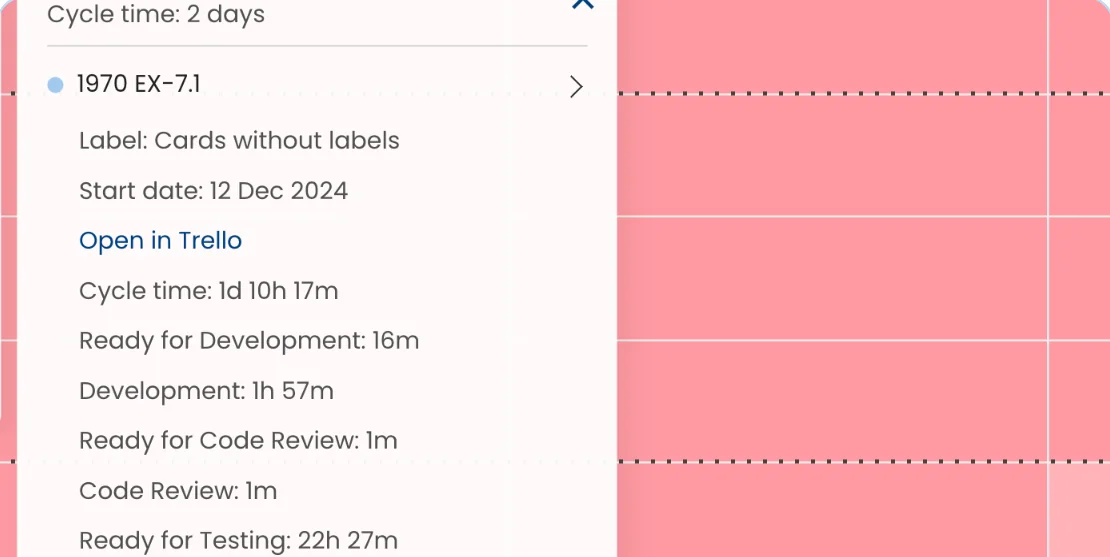
A dot represents work in progress and shows how many days it has spent in progress. Click it to see task details, a link to your management platform and the time spent in each process state.
The Aging Chart tracks your current tasks in progress. It uses the same visual format as your board, with each column representing a state in your workflow. It shows how many days each task has spent in progress.
Use the filter panel toggle to choose how status filters work. When off, items currently in excluded statuses are removed. When on, all items remain visible, but time spent in filtered-out statuses is excluded from the Aging calculation.
Use the Aging Chart to identify slowdowns while tasks are still in progress. A large cluster of dots indicates too much work in progress in a particular state.
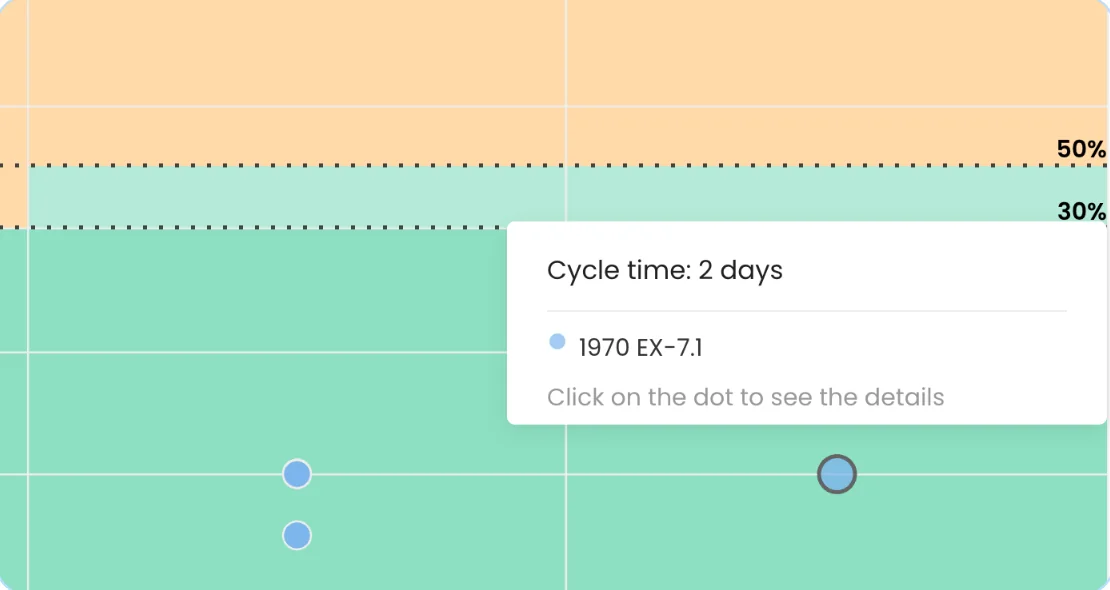
The Aging Chart shows the number of tasks currently in progress in each list on your board.
The block time widget breaks down blockers by column or state, helping you see where blockers occur in work that is still in progress.
Keep the number of work items within the WIP limit for each process state. Sticking to WIP limits supports faster delivery times and higher productivity.
Click a dot to see details about a work item in progress, including its task type and a direct link to your management platform. You can also analyze how much time the task has spent in each process state.
Use the Blocked Work toggle to show or hide blocked items. It is enabled by default. When turned off, blocked items no longer appear as red dots.
Tasks on the same list with the same WIP age are clustered together. Click the dot to expand the list and analyze each task individually.
Change the basis date to see what your process looked like on a past date and how your work items were aging at that time.
Use this feature during retrospectives to review what your workflow looked like in the past.
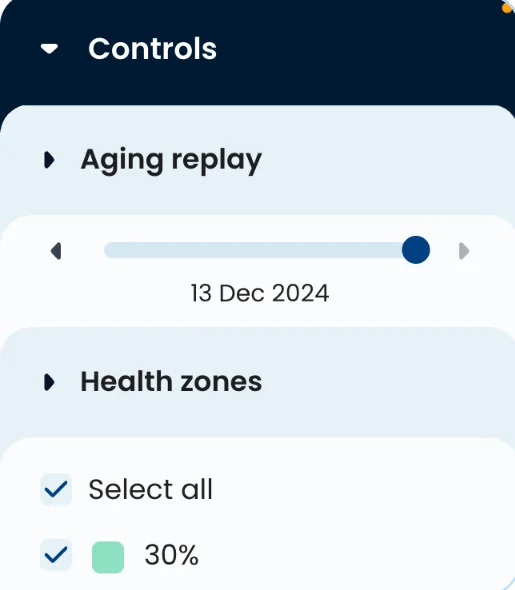
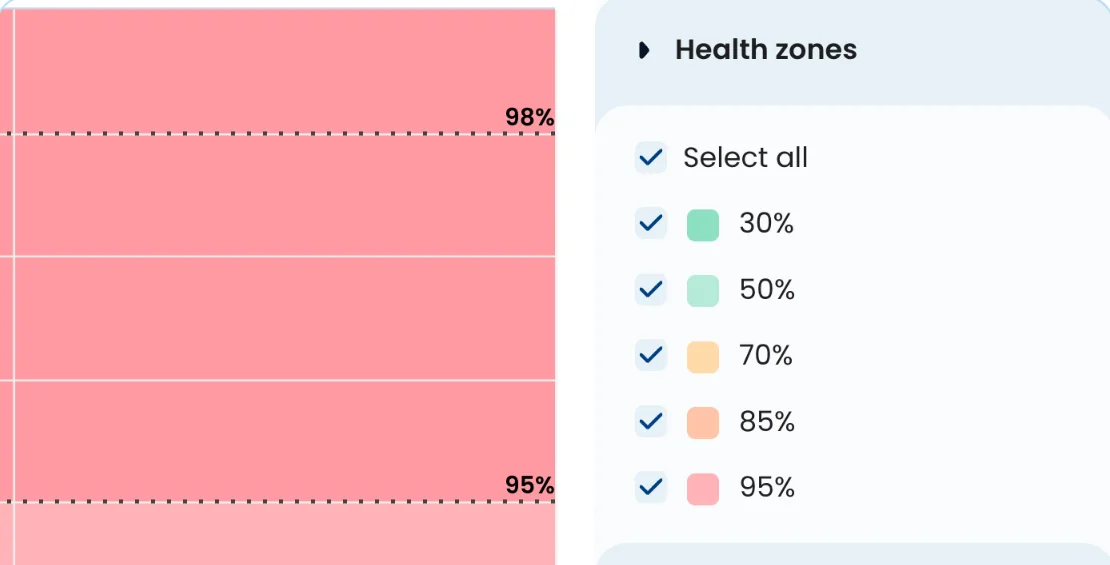
The percentile lines on your Aging Chart represent past performance. They show the cycle times needed to complete previous work.
Tasks that do not cross the percentiles used to define your service level agreements will be delivered on time. For example, if you committed to the 85th percentile and a work item crosses the 70th percentile into the orange zone, do not cut scope or rush implementation. Expedite the work instead of sacrificing quality.
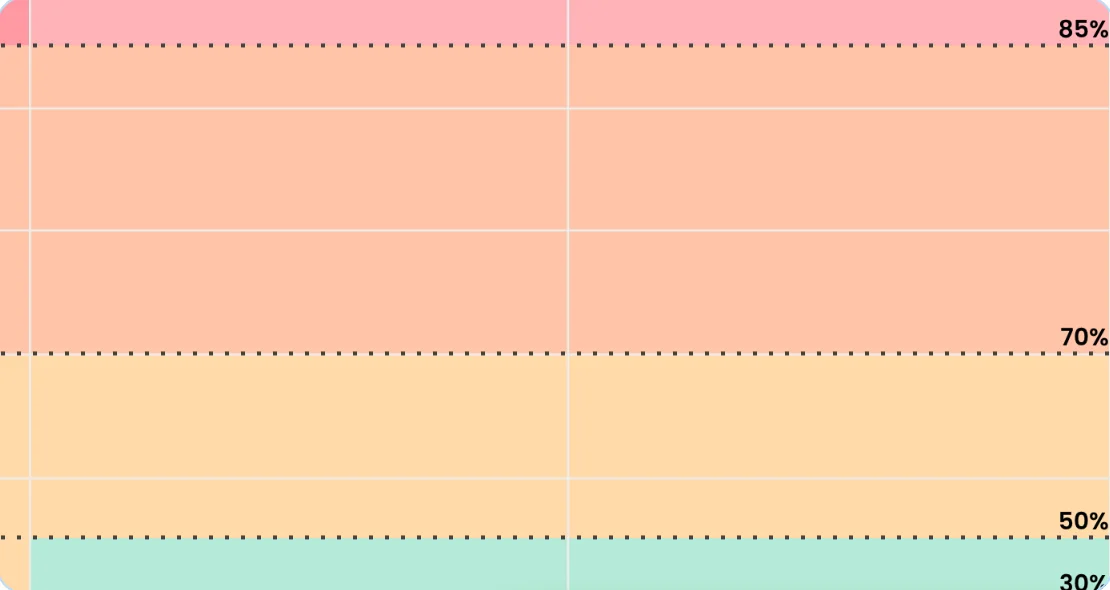
The colored health zones show how your tasks advanced through each process state in the past. For example, the green zone shows the time that 50% of your previous tasks spent in each state.
Observe how current work moves through the zones to gauge whether you will meet your commitments. Higher dots have a greater chance of delay. Look more closely at tasks in the yellow zone because they have spent more time in your process than half of the tasks completed so far.
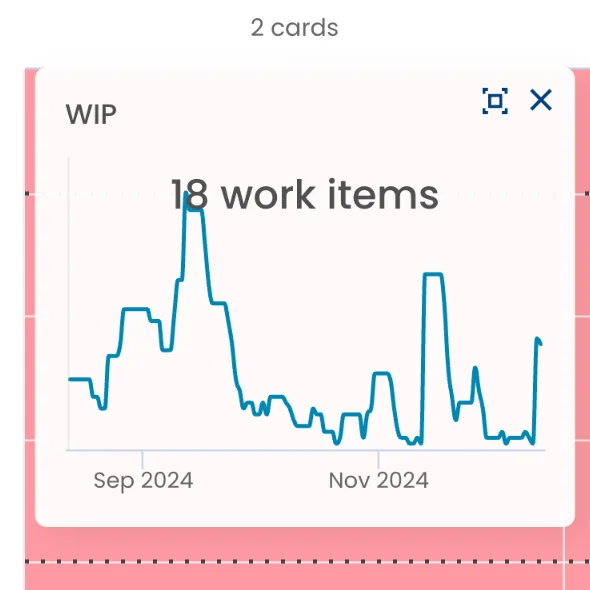
The WIP widget shows the number of tasks in progress on the selected date and how WIP trends have changed over time. Hover over the line chart to see the number of tasks in progress on each date in the selected period.
Use Breakdown by in the Controls panel to group current WIP by lists, labels, work types, requests, or custom fields. The WIP Breakdown widget shows each group’s item count and percentage in a pie chart.
The breakdown updates with Aging replay. You can hide groups from the legend, expand the widget, or select a segment to view its statuses.
Use the WIP widget to review the number of tasks in progress on the selected date and changes in WIP over time. Hover over the line chart to see the count for each date in the selected period.
The ‘Average Age of WIP’ widget shows the average age of all work items in progress on the selected date and how WIP age has changed over time. If the average age remains roughly the same each day, the trend line will be linear, indicating a stable system.
Average age of WIP and cycle time are essentially the same metric. Cycle time measures completed tasks, while task age measures tasks that are still in progress.
You can export the filtered data shown in this chart as a CSV.
A large cluster of dots indicates too much work in progress in a particular process state.
Higher dots have a greater chance of delay. Tasks in the yellow zone have spent more time in the process than half of completed tasks, while dots in the red zone are taking significantly longer than previous work items.
Check whether the number of work items exceeds the WIP limit for any process state.
How to Preserve the Predictability of Your Workflow Using the Health Zones on the Aging Chart
Open the Cycle Time Scatterplot to see how long completed work items took and identify outliers that increased delivery times.
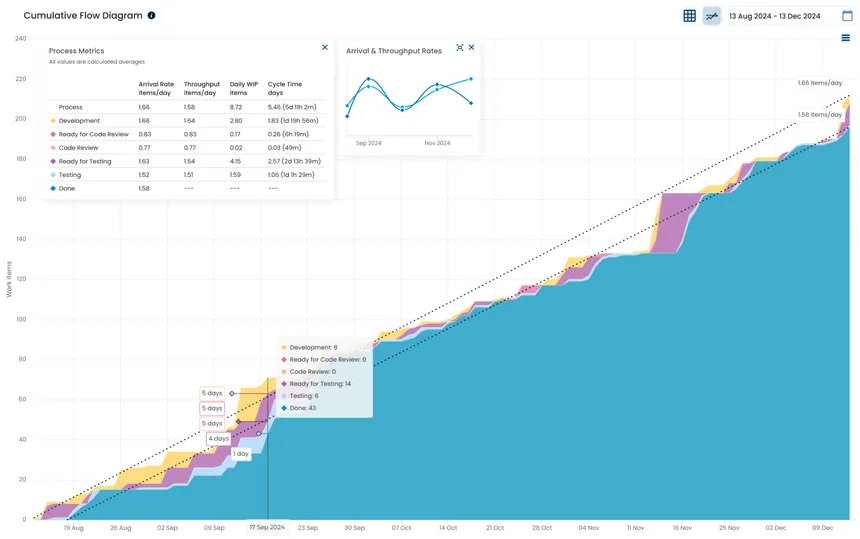
Open the Cumulative Flow Diagram to check the stability of your workflow.
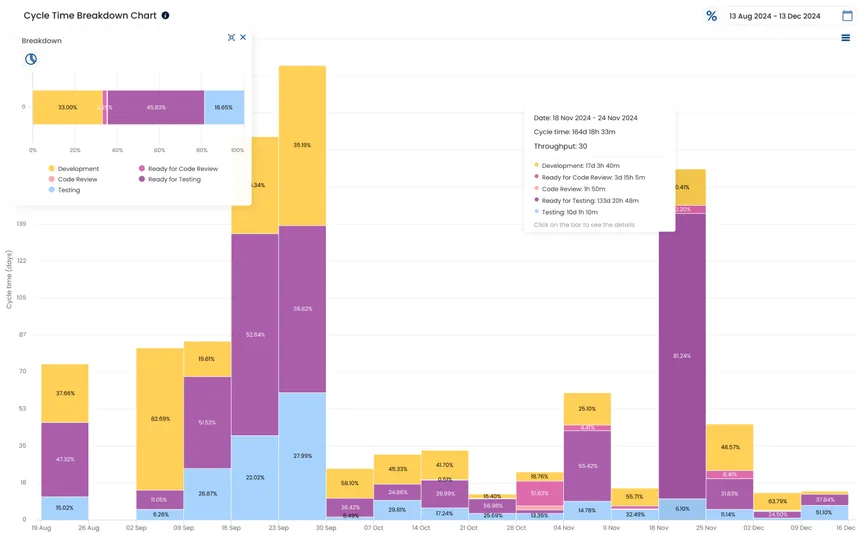
Open the Cycle Time Breakdown Chart to analyze blockers and identify which blocker has the greatest impact on delivery times.
Connect your existing delivery data and start exploring your flow.