 Nave for Trello
Turn your Trello data into delivery insights
Connect Trello to turn your existing card history into flow metrics, aging insights, delivery forecasts and dashboards for teams and leadership.
14 days, no credit card.

Trello delivery analytics
What can you learn from your Trello data?
Where is work slowing down?
See how long cards spend in each workflow stage, including waiting and blocked time, to find where delivery is being held up.
Is delivery becoming more predictable?
Track cycle time, throughput, work in progress, flow efficiency and variability over time.
What is aging now?
See cards in progress against your board's own delivery percentiles and identify what needs attention.
What can we realistically deliver?
Forecast delivery from your board's actual throughput without story points or estimates.
How it works
From Trello lists to delivery decisions
Connect a board, map its existing lists to your workflow and use the resulting evidence to decide where to act. Your Trello board stays unchanged.
- 1
Trello lists
Choose the board whose delivery flow you want to understand.
- 2
Nave workflow stages
Map its lists to not started, in progress and done, then mark the stages where work waits.
- 3
Delivery evidence
Nave computes flow metrics from the card history already held by the board.
- 4
Decision
Use the evidence to address constraints, forecast delivery and track improvement.
Diagram
Trello board lists
- To do
- In Development
- Code Review
- Ready for SITWaiting stage
- SIT
- UAT
- Awaiting ReleaseWaiting stage
- Done
Nave workflow stages
- Not started
- In progress
- Done
Start with the history you already have.
Connect your Trello board and Nave turns its existing delivery history into flow metrics, so you don't have to wait weeks to start learning from your data.
Keep managing work in Trello. Use Nave to understand how that work flows.
Trello
Manage boards, lists, cards, labels and team workflows where your teams already work. Trello remains where the work is managed.
 Nave
Nave
Use Trello card history to investigate flow, predictability, aging and constraints, forecast delivery and track improvement without changing the board.
Find constraints
Find where delivery slows down
For this board from June 30 to September 30, 2026, the Process Metrics table shows that 50%, 85% and 95% of cards left the whole process within 15, 18 and 22 days. At the 85th percentile, In Development took up to 7 days, while Awaiting Release took up to 8 days; Ready for SIT and Awaiting Release are waiting stages.
Explore Cycle Time Breakdown Chart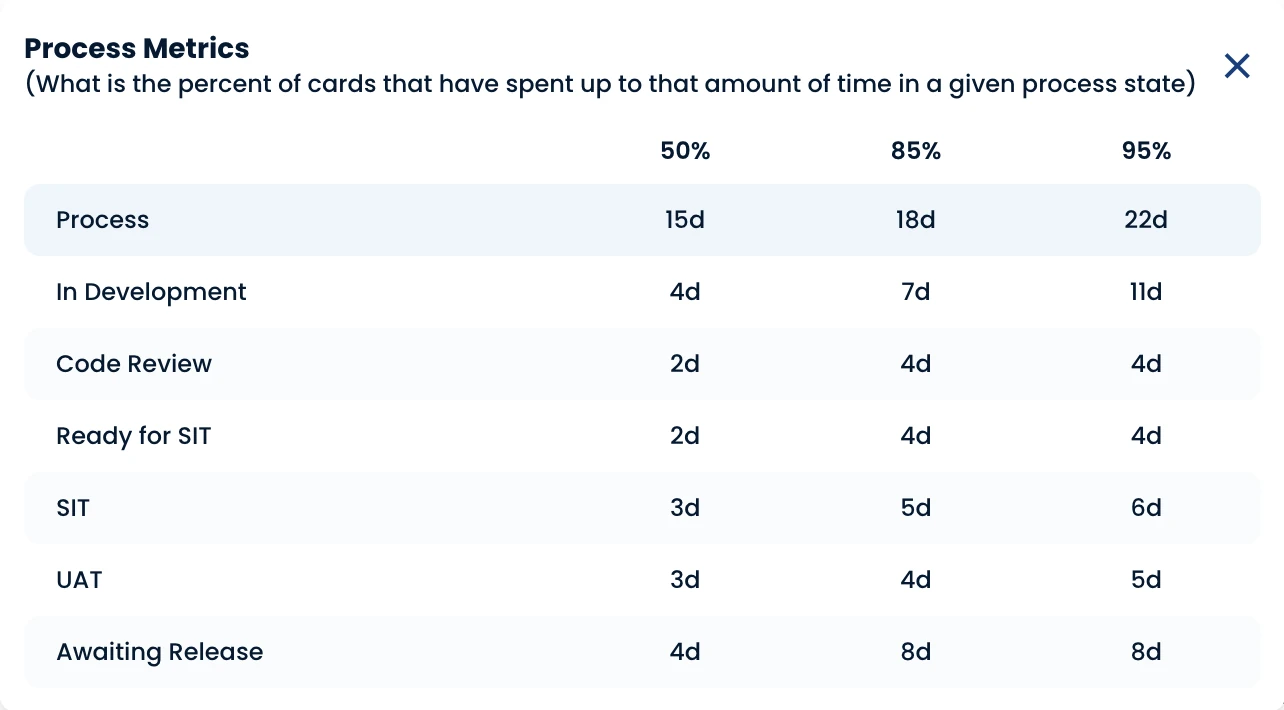
Current work
Know what needs attention now
The AI Investigator reads computed flow metrics and shows the stages and work items behind a problem. Here, it identifies five items with the same 5.58-day stage duration, flags Awaiting Release as consuming as much cycle time as In Development, and notes a tight cycle time distribution with no fat tail.
The numbers are computed, not generated. The AI only reads them, so swap the model and the numbers don't change.
Explore AI Investigator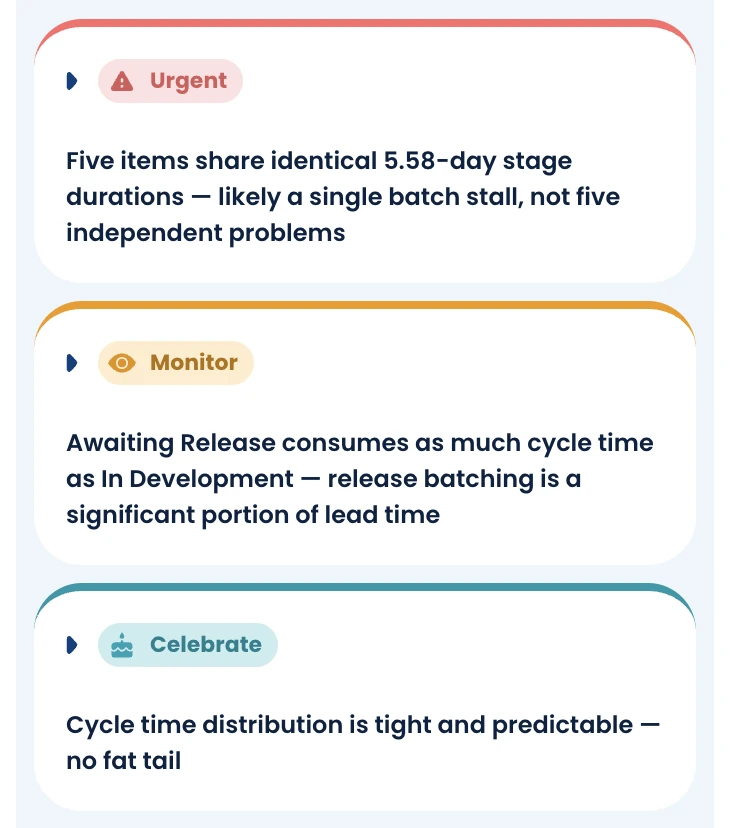
Plan realistically
Forecast what you can realistically deliver
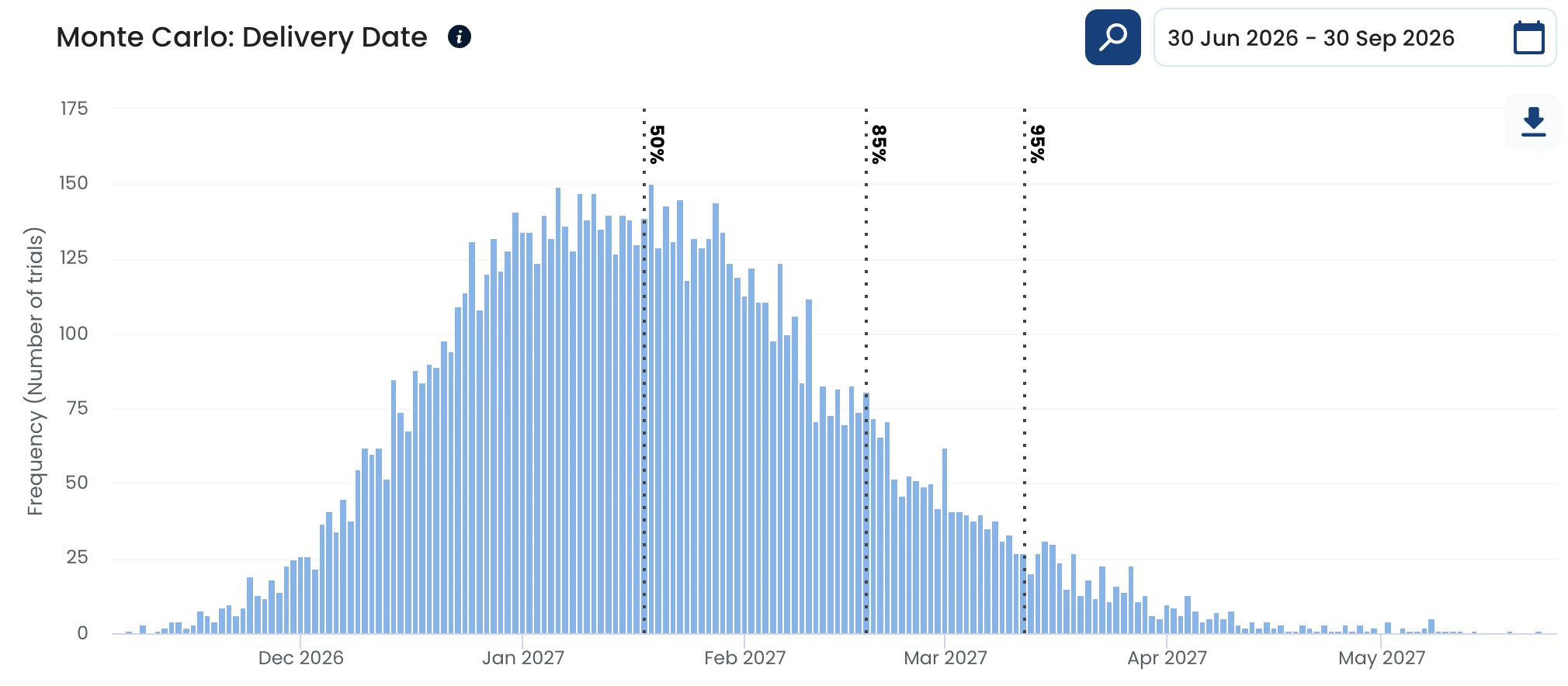
Monte Carlo runs 10,000 trials using this board's daily throughput from June 30 to September 30, 2026. For 57 items starting on September 30, it forecasts completion by January 18, 2027 at 50% confidence, February 18 at 85% confidence and March 12 at 95% confidence, without story points or estimates.
Scale the view
From one Trello board to leadership visibility
Roll Trello team dashboards into Services and Portfolios, including Services that contain Trello boards alongside teams using Jira, Azure DevOps and Asana. Executive Dashboards compare performance over time across teams and Services.
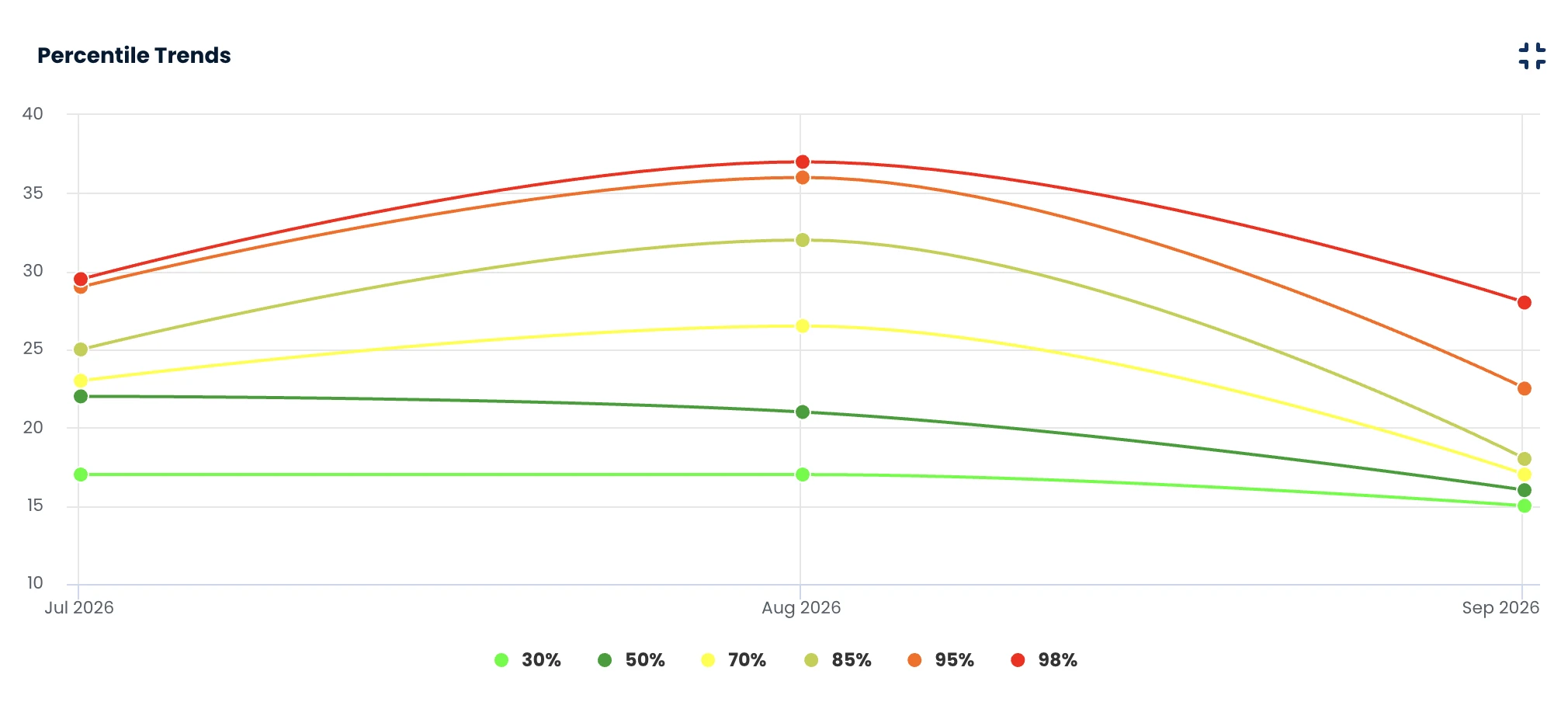
In one portfolio, the 85th-percentile cycle time moves from 25 days in July to 32 in August and 18 in September. The 50th percentile moves from 22 to 21 to 16 days, while the 95th moves from 29 to 36 to 22.5 days.
- Team dashboards
- Services
- Portfolios
Analytics trusted by 7,000+ delivery teams worldwide











Explore Trello analytics in Nave
Connect Trello
Two ways to connect your Trello board
Log in with Trello
- Go to trello.getnave.com
- Select Log in with Trello
- Approve Nave on Trello's page
Start your trial or sign in to your existing Nave account.
Log in with TrelloNave Power-Up inside Trello
- Add the Nave Power-Up from the board menu
- Grant Nave access to the board
- Open Nave from the Power-Up
If the board has no dashboard, Nave creates one and automatically sorts its lists into To Do, Doing and Done.
View the Nave Power-Up
Each connected Trello board counts as one subscription board, and the 14-day trial includes every feature with no credit card. See Pricing
How Nave reads and handles Trello data
What comes across
For each card, Nave keeps its ID, board, list, members, name, due date, link, labels, selected custom field values and every move between lists with its date. It keeps dropdown and checkbox custom fields, never free-text values. Nave does not request card descriptions or store comments or attachments, and it never downloads attachment files.
Lists become stages
Each dashboard maps one Trello board. Map its lists to not started, in progress and done, then mark waiting stages so flow efficiency separates active time from waiting time. Nothing on the Trello board changes. To track blocked work, create a Checkbox custom field in Trello, select it as the blocked flag in Edit Dashboard and tick it on blocked cards.
Filters
Filter dashboards by labels and by the dropdown and checkbox custom fields you select.
Your existing history
Nave reads the card history your Trello board already holds, so charts are available as soon as the first sync finishes. Archived cards in Done lists are included. Archiving or moving cards that are still in progress removes them from the analytics.
What Nave never does
Nave never creates, changes or deletes cards, lists, boards, labels, comments or custom fields in Trello. It writes only its own webhook and the Power-Up's private settings. The webhook lets Nave update your charts when the connected board changes.
Permissions and sign-in
Nave asks for Trello's read and account permissions and has never asked for write permission. It uses account permission only to read your email address, and it can read only what your Trello account can see. You approve Nave on Trello's page, so Nave never has access to your Trello password.


Connect Trello and start with your own data
Start a 14-day trial with every feature and no credit card, or book a demo to discuss your Trello setup.