I sat across from a coach last month who told me something I’ve heard a hundred times: “They agreed with everything I showed them. And then they did nothing.”
He had spent two weeks building the case. Throughput was flat. Aging work was piling up. The team was stretched across twelve active initiatives and finishing none of them well. His recommendation was straightforward: pause three initiatives so the team could deliver on the rest.
Leadership nodded along. Asked smart questions. Thanked him for the thorough analysis.
And three weeks later, all twelve initiatives were still active.
I know this story because I’ve lived it. In my early years consulting, I would walk into leadership meetings with solid data, a clear recommendation, and complete confidence that the evidence would speak for itself. When nothing moved, I would try harder. Present the data differently. Add more charts. Reframe the argument.
It took me an embarrassingly long time to realize that I was solving the wrong problem.
Why Leadership Agrees With Your Data and Still Doesn’t Act
Here’s the thing: when leadership listens to your recommendation, agrees the system is overloaded, and still doesn’t act, they’re telling you something. And the thing they’re telling you is rarely “we don’t believe you.”
They believe you. They see the overload. They know the teams are stretched.
They can’t act because your recommendation, as presented, doesn’t give them enough to make the call.
Let me break that down, because this is important.
“Pause three initiatives” is a direction. It tells leadership what to do. What it doesn’t tell them is how to do it without breaking something else.
Which three initiatives? What happens to the commitments attached to each one? Are there contractual deadlines? Who owns the dependencies that cross into other teams? What does capacity actually look like if they pause — and what does the next quarter look like if they don’t? What’s the cost of continuing as-is, in terms leadership can take to their stakeholders?
These aren’t unreasonable questions. They’re the exact questions any responsible leader needs answered before they can sign off on a decision that affects multiple teams, budgets, and commitments.
And that’s what the pushback was telling you. Every question leadership didn’t ask out loud is a gap in your recommendation that prevented them from acting.
The Structure Behind Every “No”
Once I started treating pushback as data instead of rejection, I noticed something. The objections have a structure. They fall into patterns. And each pattern points to a specific gap in the recommendation.
Pattern 1: “We can’t pause that one.” This means there’s a commitment or dependency you didn’t account for. Something is attached to that initiative that makes it politically or contractually impossible to pause, and your recommendation didn’t acknowledge that reality.
Pattern 2: “What happens to the people?” This means leadership is thinking about organizational consequences your recommendation didn’t address. Who gets reassigned? Who’s left idle? Does the team structure still make sense?
Pattern 3: “Can you show me what that looks like?” This is the most encouraging pushback you can get. Leadership is interested. They want to act. They need to see the path — specific projected outcomes, timelines, trade-offs — before they can commit.
Pattern 4: Silence followed by “We’ll take this under advisement.” This usually means the recommendation touched something political that you didn’t map. Someone in the meeting has a stake in one of those twelve initiatives, and your recommendation didn’t account for who that person is or what they stand to lose.
Every single one of these patterns is useful. They’re not roadblocks. They’re a map of exactly what your recommendation needs to include to become actionable.
Raise your hand if you’ve ever walked out of a leadership meeting wondering why nothing moved. I am raising both hands right now. And I wish someone had told me this years ago: they weren’t saying no to your recommendation. They were saying “we can’t act on this yet.”
How AI Changes What You Can Build
This is where it gets exciting.
A year ago, filling those gaps — tracing twelve initiatives through their dependencies, mapping each one to capacity data, building two or three scenarios with specific projected outcomes — required connecting every dot across the system. The work existed in theory. In practice, a coach working across multiple teams couldn’t build it. There weren’t enough hours in the week.
That constraint moved.
You can now take that same recommendation — pause three initiatives — and build the full strategy around it. Let me show you what I mean.
Start with the data you already have. Throughput trends, cycle time distributions, aging work — the signals that told you the system is overloaded. Those signals were right. Now let AI trace each initiative through the system. Which ones share dependencies with the highest-priority work? Which ones are contributing most to the WIP accumulation? What happens to cycle time and throughput under each scenario?
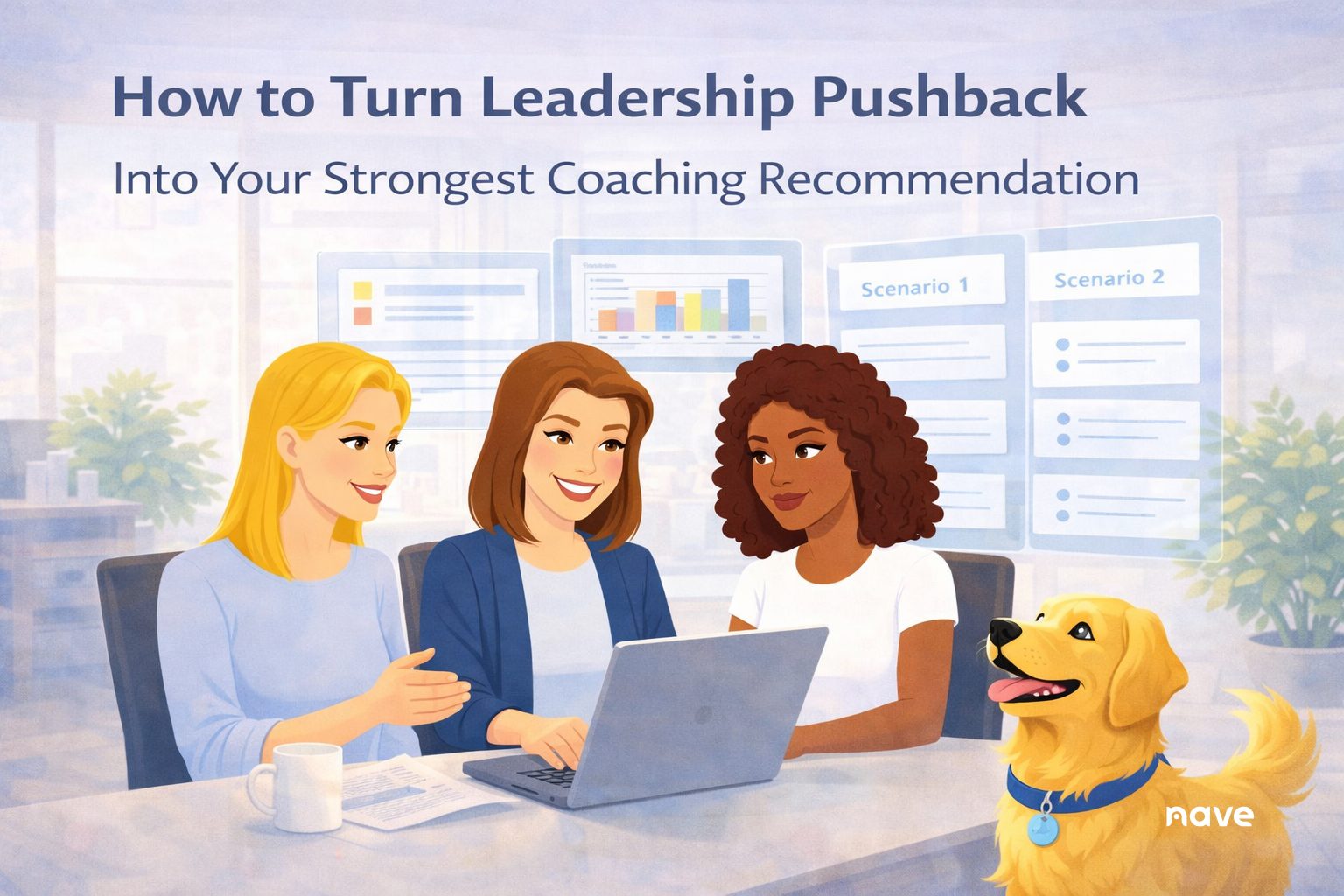
You end up with something that looks very different from a single recommendation. You end up with two or three scenarios, each with specific projected outcomes:
– Scenario A: Pause initiatives 4, 7, and 11. Projected impact: cycle time drops by 30-40% within two sprints. Dependency on initiative 7 affects Team B’s Q3 milestone — here’s the mitigation.
– Scenario B: Pause initiatives 4 and 11, reduce scope on 7. Smaller impact on cycle time, but preserves the Q3 commitment. Trade-off: Team A’s throughput stays constrained for another quarter.
– Scenario C: Continue as-is. Projected impact: aging work continues to accumulate, cycle times increase, Q3 commitments are at risk across the board.
That’s a strategy. Leadership can act on a strategy.
And here’s the thing: when they push back — “we can’t pause initiative seven because of the Q3 commitment” — you already have the answer. You’ve already built the scenario that accounts for that constraint. You can show them what keeping initiative seven costs the other four, with specific numbers.
Every objection makes the case sharper. Every pushback points to a gap you can fill in real time, because the investigation is already done.
I’ve watched coaches go through this shift. The ones who treat pushback as feedback — who go back, fill the gaps, build the scenarios leadership needs — are seeing the conversations transform. When the full picture is there, specific items, specific trade-offs, specific projected outcomes, the conversation moves from “should we act?” to “how do we implement?”
Your Action Plan
Here’s what I want you to try.
Step 1: Think about the last recommendation you made that didn’t land. The one where leadership agreed with the data and still didn’t move.
Step 2: Write down the questions they asked. Write down the questions they didn’t ask but should have. Write down the silence — the moment where someone shifted in their chair or changed the subject.
Step 3: For each of those moments, ask yourself: what was missing? What trade-off wasn’t visible? What commitment wasn’t accounted for? What scenario would have made the path clear enough to follow?
Step 4: Build that. Use your data. Use AI to trace the dependencies, map the scenarios, project the outcomes. Build the recommendation that answers every objection before it’s raised.
Step 5: Walk back in. Same recommendation, different package. Direction plus strategy. Evidence plus path.
If you need permission to treat pushback as data instead of rejection, I’m happy to be that person. It changed how I prepare for every hard conversation. I think it will change how you prepare too.
And if you want to see what it looks like when AI investigates your flow data and surfaces the evidence trails automatically, you can try it out at getnave.com. It takes seconds to connect your board and see what your data is already telling you.
You’ve always had the right signal. Your data was right. Your recommendation was right. What’s changed is what you can build around that signal — the investigation that connects every dot, the scenarios that make consequences visible, the strategy that gives leadership something they can execute.
That’s what resistance was always asking for. And now you have the tools to deliver it.
I’ll see you next week, same time and place. Bye for now!